 CARIS HPD Publications Module
 CARIS HPD Publications Module
Menu | Publication > Generate Instructions |
Tool | |
Capture attribute information from selected features in HPD Paper Chart Editor (PCE) or HPD Source Editor (SE), and insert the information as instructions in a notice.
An XSLT file is used to format the instruction and determine the types of information that are displayed.
In PCE, the layer that contains the feature can be a Panel layer or a Project Review layer, but the product must belong in the same schema as the publication.
In SE, the layer that contains the feature can be from a usage layer or a Project Review layer, but the project must have a chart that is in the same schema as the publication.
It is recommended to select features from a Project Review layer. This enables the instructions to be more fully generated using the changes made in the project.
For example, a regular selection will generate a new instruction whereas generating from the Project Review layer will generate add/delete and update instructions.
Related commands:
• • • • • • • | • • • • • • • |
Interface
Property | Description |
|---|---|
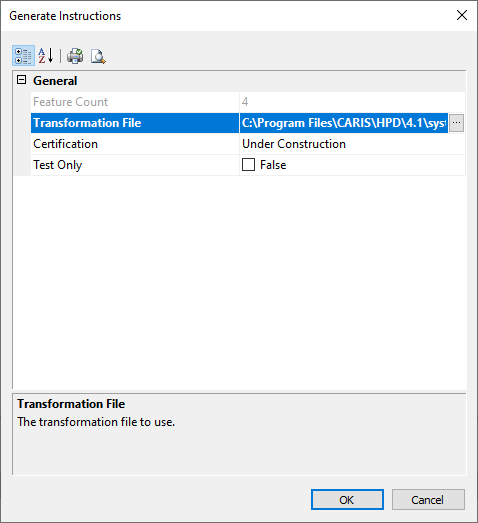
Feature Count | Total number of selected features in the HPD editor that will be processed. This is a read-only field. |
Transformation File | Path and name of the XSLT file used to format the record. 1. Click Browse. The Open dialog box is displayed. 2. Select an XSL:T file. 3. Click Open. The path and name for the file are displayed. |
Certification | Certification status of the new record: • Under Construction • Not Verified • Accepted • Verified • Rejected. The default is Under Construction. For more information, see Certification. |
Test Only | True: Run a diagnostic tool to examine the in-memory XML files that are generated from the XSLT processor, and customize the XSLT rules. 1. Enable Test Only. A Save As dialog box is displayed. 2. Type the name of the file. 3. Click Save. Two XML files are created and saved to the same directory as the XSLT file: • Input file contains only the information from the HPD editor. It has • Output file contains the Publications Module XML that is created when the input file is combined with the rules from XSLT file. This is the file that is used by Publications Module. It has 4. Click OK. The records are listed in the Notices window. You can view both the False: No test is run. For more information on the in-memory XML documents and XSLT, see Publications. |
Procedure - Paper Chart Editor
1. Open Publications Module.
2. In PCE, select the feature or features that you want to include in the instruction.
3. In Publications Module, select a pending or publication notice in the Object Browser.
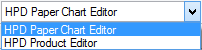
4. In the Generate Instructions list box for editors, select PCE.
5. Select the Generate Instructions command.
The Generate Instructions dialog box is displayed.
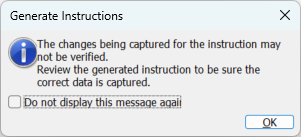
6. Click OK to dismiss the popup window.
7. Define any necessary properties.
8. Click OK.
9. When a popup window reports that the operation is completed, click Close.
A new pending or publication instruction is created. Instruction properties are filled according to the selected XSLT file. The instruction is given a default action of Insert, but this can be changed.
Procedure - Source Editor
1. Open Publications Module.
2. In Source Editor, select the feature or features that you want to include in the instruction.
3. In Publication Module, select a pending or publication notice in the Object Browser.
4. In the list box for editors, select Source.
5. Select the Generate Instructions command.
The Generate Instructions dialog box is displayed.
6. Click OK to dismiss the popup window.
7. Select a panel layer.
8. Click OK.
9. Select a Transformation File for chart notices.
10. Select a Certification value.
11. Click OK.
12. When a popup window reports that the operation is completed, click Close.
A new pending or publication instruction is created. Instruction properties are filled according to the selected XSLT file. The instruction is given a default action of Insert, but this can be changed.
